Handball socks, high or low


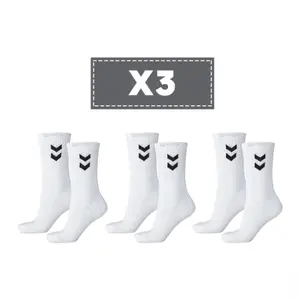


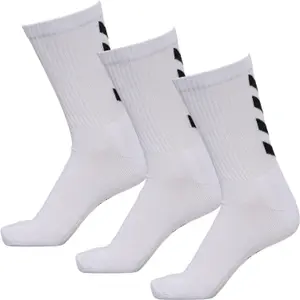


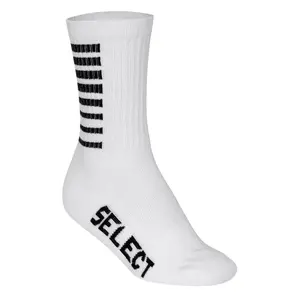


High up to the calf or cut at the ankle, handball socks offer different benefits: the former extend the match kit and protect the leg on the floor, while the latter lighten the foot for sessions.
Between the two, the mid-high covers the ankle without being too warm. Choose the length based on the use, then the material according to how you sweat.
What length changes on the pitch
The high sock is the one used for team kits: it matches the colour of the shorts and covers the shin, which helps prevent burns when you slide on the court. The mid-high protects the ankle from rubbing against the shoe collar, providing real comfort with high indoor shoes. The low sock, almost invisible, allows your leg to breathe during summer training or fitness sessions. Many players thus have two types of pairs in their bag: highs for matches, lows for training.
Cotton, polyester, mix: the composition of a good sock
Pure cotton is soft but retains moisture, and a wet foot slips in the shoe. Synthetic fibres manage sweat better and dry quickly. Most sports socks mix both, with a bit of elastane for support. Also check the reinforced areas: thickened heel and toe, arch supported by an elastic band, and denser mesh under the foot for cushioning landings. Finally, you can find socks with anti-slip dots under the sole, which reduce foot movement in the shoe.
Hummel, Mizuno, Kempa, Erima, Errea: compare the pairs
- Hummel: the Blaze Pro, available in high or low training versions, and the Pro Low, a low pair designed for indoor use.
- Mizuno: multi-sport socks and high or mid-high pairs, sold individually or in packs.
- Kempa: the Logo Classic, a high sock with a prominent logo, available in several club colours.
- Erima: training socks, often sold in packs of three pairs.
- Errea: the Italian brand offers club socks and models without feet, to be worn with a footie sock.
Multipack pairs: for the week or for the club
A player who trains three times a week wears out their socks quickly. Multipack identical pairs have two advantages: you never have to look for a matching pair, and you can refresh your entire drawer at once. For a club, ordering the same model of high sock for the whole team ensures a consistent colour during matches, something two pairs from different brands never fully provide.
Washing your sports socks without wearing them out
Turn your socks inside out before washing them: dust and dead fibres accumulate inside. A moderate temperature is enough; water that is too hot loosens the calf elastic. Avoid bleach, which yellows the synthetic fibres of white pairs, and dry them in the open air rather than in the tumble dryer.
Shirt, shorts, under-shirt: related items
- The high sock is chosen with the shorts: handball shorts come in the same colours.
- The top of the outfit can be found among the hand jerseys.
- A calf sleeve, selected from the baselayers, pairs well with a low sock.
- For sessions, add technical t-shirts and polos.
- After the match, one of the sweats replaces the soaked jersey.
- For travel, check out the jackets and tracksuits.
- For warm-ups, training pants are worn over.
Pay less for your training pairs
Socks are part of the most frequent purchases. To reduce costs, the page textile clearance gathers end-of-line items, and the special textile offers feature current discounts. The textile sales are another chance to stock up.
Frequently asked questions
Are non-slip socks useful in handball?
They limit foot movement inside the shoe during direction changes. Some players swear by them, while others find them too grippy. Try them in training before using them in a match.
Should you wear two pairs of socks on top of each other?
This is not advisable: two layers slide against each other and create folds, leading to blisters. A single thick pair, sitting flat, provides better protection. Some players only combine a club footless sock with a technical footie sock.
Why do my socks always get holes in the same place?
A hole at the big toe often indicates a nail that is too long or shoes that are too short. A hole at the heel comes from friction against the collar. Check your shoe size before blaming the sock.
What sock size should I choose between two sizes?
Take the range that includes your indoor shoe size. If you're exactly between two ranges, the larger one prevents the sock from pulling on your toes, provided that the heel fits nicely.
Does a compression sock have any benefits in handball?
It supports the calf like a sleeve, with the foot included. Some players appreciate it for the feeling of light legs at the end of a match. Choose it in your exact size; excessive compression can become uncomfortable quickly.